Google Agents Enter Service at the Pentagon
Google Agents Enter Service at the Pentagon
Following the friction between Anthropic and the US Department of Defense, several players seem eager to fill the technological void that Dario Amodei's company appears determined to leave behind. Google stands out among them, reclaiming its position at the Pentagon by capitalizing on its rivals' setbacks. The company is distributing its AI to 3 million civilian and military personnel, though limiting it (for now) to bureaucratic tasks on unclassified networks.
The News
On March 10, 2026, Google officially announced the introduction of a tool called Agent Designer. This will allow Pentagon personnel, both civilian and military, to build custom AI agents, thereby optimizing and improving routine workflows on unclassified networks.
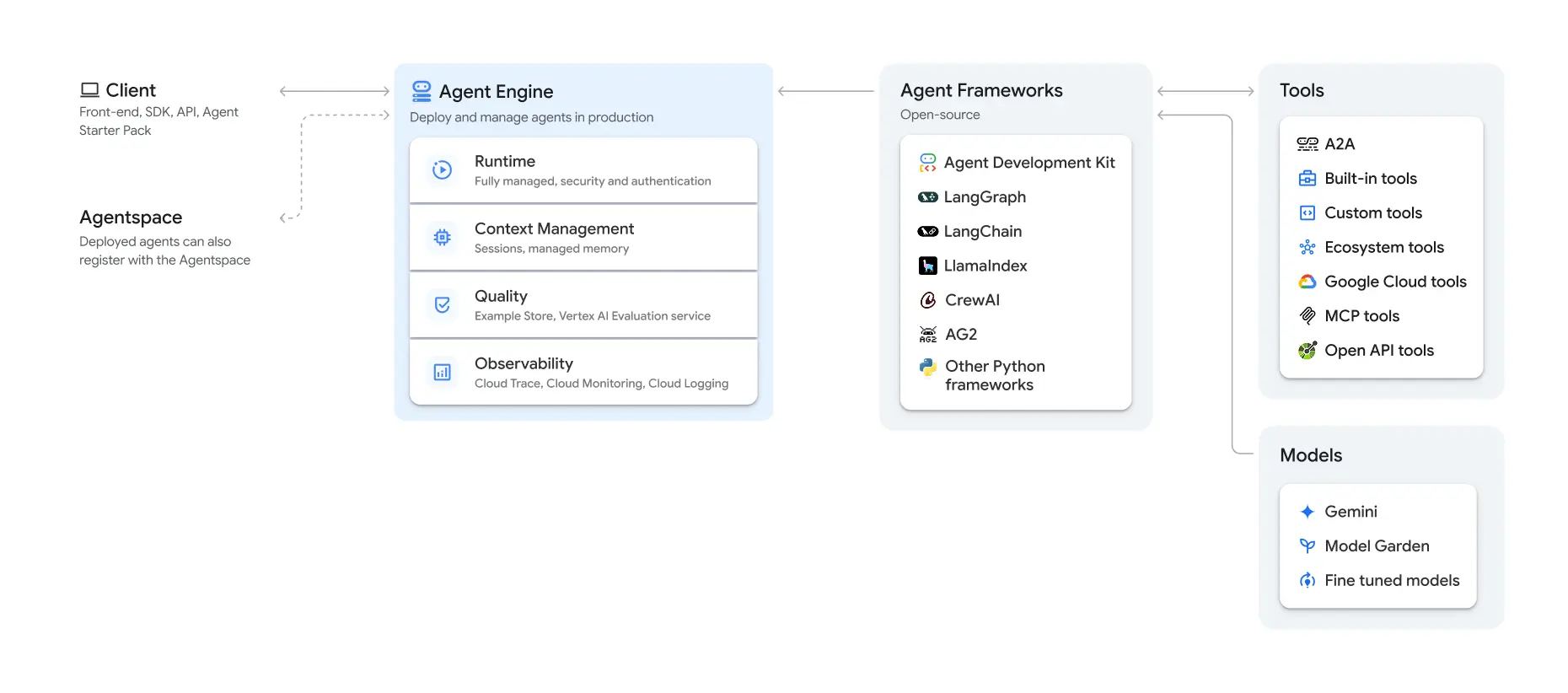
As stated in the announcement, the intent is to make generative AI technologies available to civilian and military personnel operating on unclassified networks.
Currently, this operational pipeline excludes direct military involvement: department employees will be able to use these optimization tools on the designated GenAI.mil platform, accelerating the creation and management of files and documents, organizing meetings, and more generally improving daily workflows within the Pentagon's networks.
The Agent Designer, alongside the establishment of a dedicated platform, represents an unprecedented scale of adoption: Google has been selected as the vendor to bring its agents into this infrastructure with a rollout to approximately 3 million employees (both civilian and military), effectively making it one of the largest deployments of agentic generative AI within a government apparatus.
Beyond the Headline
Given Anthropic's designation as a supply chain risk, the imminent officialization of the executive order, and the entry of various other providers as AI technology suppliers, one might wonder whether these moves are aimed at strengthening military intelligence and efficiency, or if they are a show of force, demonstrating a refusal—at least publicly—to compromise with private companies. However, this involves a pre-existing and publicly known collaboration and use of technologies, which has likely returned to the spotlight now to emphasize the narrative of a "vendor war."
It has never been a secret that Google collaborates with the US government; in 2017, Project Maven was established under the signature of Deputy Secretary of Defense Robert O. Work, and Google was the first provider chosen to offer Vision technology through its artificial intelligence and machine learning algorithms, with an estimated contract value of $9 million.

Image source: [EuroNews](https://www.euronews.com/next/2023/11/16/my-concerns-are-more-about-people-institutions-than-the-tech-signals-meredith-whittaker-on)
However, similarly to what recently happened with Anthropic, in 2018 several Google employees opposed this collaboration. Driven by prominent figures in AI ethics like Meredith Whittaker, thousands of employees signed an internal petition, raising strong concerns over the military applications of their technology. The intense internal pressure, culminating in the resignation of several dozen engineers in protest, forced Google to step back and not renew the contract (subsequently leaving room for other companies like Palantir and Microsoft).
Since then, relations with the government have always remained cautious, and the renewed top-tier partnership with the Pentagon materializes in a peculiar timeframe, following the exclusion of competitors, hinting at an intention to scale toward the highest levels of US Defense secrecy.
The true scope of Google's operation at the Pentagon cannot be understood by looking at a single announcement, but rather by connecting the dots between the infrastructure prepared over time and the close temporal proximity of the recent software launch. In fact, by late 2024, Google was positioning itself to become the final major provider of the Joint Warfighting Cloud Capability (JWCC) mega-contract to achieve Impact Level 6 (IL-6) security authorization—a fundamental technical requirement for storing and processing classified military information up to the "Secret" level.
With that cloud foundation firmly in place, the Mountain View company found itself in the ideal position to capitalize on the sudden void created in early March 2026. When Anthropic, previously the sole AI provider operating in the Pentagon's classified cloud, was blacklisted by the government for refusing to deploy its technology in autonomous weapons and domestic surveillance, Google accelerated its commercial proposal. Exactly one day after the launch of Anthropic's lawsuit against the Trump administration, Google announced the debut of "Agent Designer" on the GenAI.mil platform, making its Gemini models available to three million Defense employees.
Although official communications prudently focus on automating mundane bureaucratic tasks on unclassified networks, the previously secured IL-6 infrastructure provides the technical foundation that makes the scenarios suggested by rumors operationally feasible—namely, that there is interest in bringing Google's new agents into classified and top-secret environments.
Related Articles

Armed Intelligence: the divorce between Anthropic and the Pentaon
While the whole world is reinventing itself through a true technological revolution, the US is not standing by: the administration seems determined to modernize its operational doctrines, integrating generative artificial intelligence at the core of its military and geopolitical strategies.