Armed Intelligence: the divorce between Anthropic and the Pentaon
Armed Intelligence: The Divorce Between Anthropic and the Pentagon
While the whole world is reinventing itself through a true technological revolution, the US is not standing by: the administration seems determined to modernize its operational doctrines, integrating generative artificial intelligence at the core of its military and geopolitical strategies.
The News
US Secretary of Defense Pete Hegseth has officially designated Anthropic as a "supply chain risk" for national security. This is not a mere threat, but a heavy and already operational label that prohibits any Pentagon contractor or supplier from having commercial relations with the company; a measure that historically has only branded entities defined as enemies of the State.
He did so through a post on X where he does not hold back from emphasizing the army's absolute authority regarding decisions on the use of its own resources, harshly criticizing Anthropic's internal policies, explicitly defined as "woke".
Doubling down, Donald Trump (as read in a post retweeted by Hegseth himself) defines Anthropic's top executives as "left-wing nut jobs," guilty of arrogating to themselves the right to decide how the country should conduct its armed conflicts.
This debacle stems from the decision of Dario Amodei (CEO of Anthropic) not to give in to the Department of Defense's ultimatum, going so far as to give up a government agreement worth a staggering 200 million dollars. The fracture occurred after the company ascertained the use of its artificial intelligence in military operations conducted first in Venezuela and, more recently, in Iran.
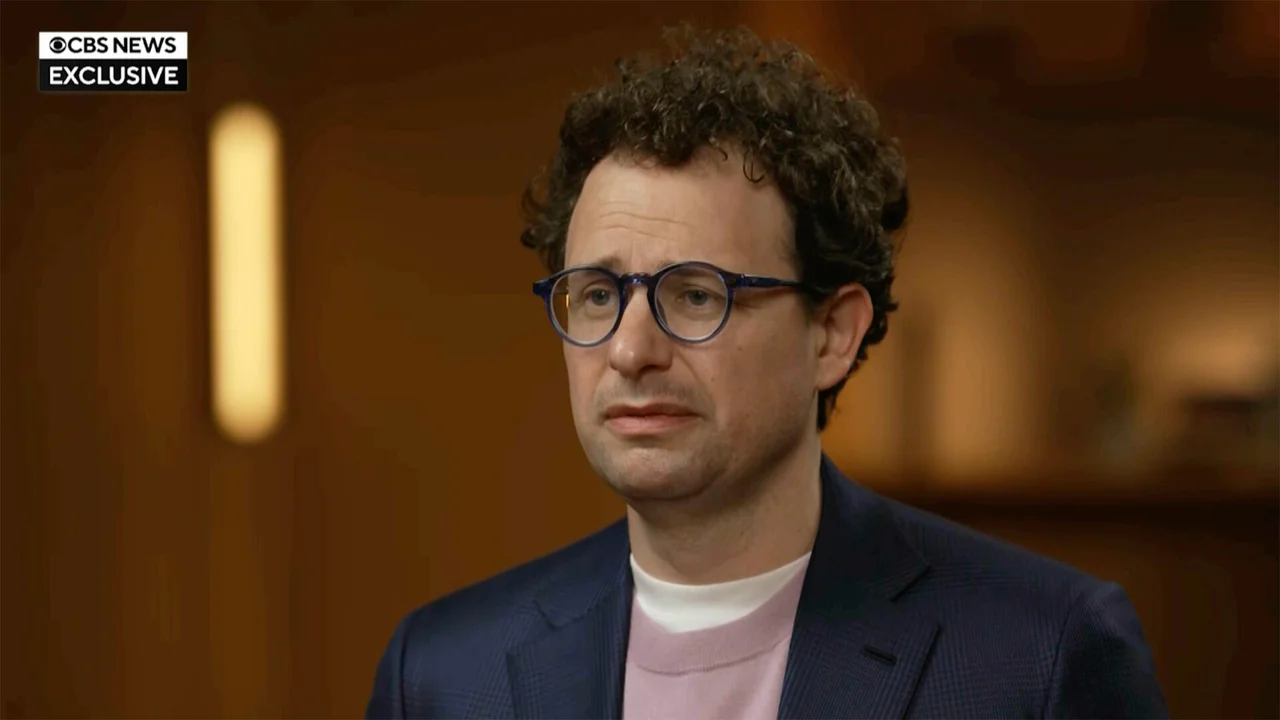
The reasons for the estrangement are linked to two fundamental usage clauses that Anthropic imposes on its technologies, deliberately violated in the attacks conducted in the Middle East and South America. Amodei himself reports this in an interview conducted by CBS and, publicly, in a post on Anthropic's official website. Here, the CEO elaborates on the communication between the parties, underlining how the directives from the Pentagon arrived almost exclusively via tweets, without the due trappings of institutional officialdom.
TL;DR
The Alliance
On July 25, 2024, Anthropic announced the officialization of its first collaboration with the United States government in an article published on its site. The agreement was then consolidated in July 2025 with the signing of the multi-million dollar mega-contract.
The company had made itself available to implement technological solutions (heavily based on its artificial intelligence models) in line with democratic principles and government needs, providing full support for a technological advancement that, in the medium term, was supposed to bridge the strategic gap with China.
Following the Defense Secretary's recent statements, Anthropic pointed out that, despite having every interest in honoring its agreements, it has always maintained a firm stance on security. It has indeed distanced itself from potential commercial partners recognized by the department itself as "traceable to Chinese military companies" and has banned the use of its services in regions considered "unsafe," thereby damaging, albeit marginally, its own economic interests in order to stay true to its principles.
The Divorce
Reconstructing the various statements and timelines, the integration of Claude into the Pentagon's classified networks occurred mainly through the Maven system of Palantir, a well-known US defense contractor. As also cited by a recent article in The Guardian, the technology was central to the organization of the military operations that led to the capture of Nicolás Maduro in Venezuela and, subsequently, in the recent attacks in Iran.
In the interview conducted by CBS, Amodei responds to accusations of having caused a technological setback of at least six months for the American army. The CEO reiterates the willingness to provide support to Defense with the means available, but clarifies the absolute unavailability to negotiate on two red lines:
- Use of AI technologies for domestic surveillance operations
- Use of AI technologies for the development of fully autonomous weapons
Partially automated weapons already exist and are currently employed, for example, in the defense conducted by the Ukrainian army – Amodei recalls –, but at this moment the technology is not mature enough to consider completely eliminating human intervention from the lethal decision-making process. Regarding domestic surveillance services, he reiterates that such a practice would not only violate the fundamental rights of American citizens but would in no way guarantee real national security.
Faced with the Department of Defense's ultimatum, which requested a modification of the agreement to guarantee unrestricted use of the technology, Anthropic stated that it could not "in good conscience" accept such conditions.
In response to Amodei's inflexibility, President Donald Trump ordered the immediate and total suspension of the use of the company's technologies by all federal agencies, ultimately leading to the designation of Anthropic as an internal risk to the supply chain.
What Changes Now
With this formal tear, Anthropic loses a considerable investment: the government agreement, in fact, amounts to a full 200 million dollars. However, considering the vast consensus and global adoption of Claude models, it is unlikely that this single financial loss will bring the company to its knees in the short term.
The real danger lurks in the domino effect of the measure invoked by the United States. Labeling Anthropic as a "supply chain risk" prevents any commercial relationship not only with federal agencies but also with any Enterprise entity that does business, even indirectly, with the Department of Defense. A blow that risks excluding it from a huge slice of the B2B market.
While Anthropic stands its ground on its principles, competitors are not just watching. OpenAI, in particular, has shown extreme interest in taking over the agreement. Sam Altman has attracted more than a few criticisms for his open willingness towards military contracts; however, considering OpenAI's colossal cash burn rate and recent projections raising doubts about their long-term financial sustainability, several analysts believe that the pursuit of such lucrative government partnerships has become a strategic necessity.
Yet, this muscular move by the Pentagon risks creating sensational turmoil within the American government machine itself. As pointed out by Dario Amodei, this is not simple self-promotion: uprooting a technology already deeply embedded in operational and intelligence modalities (integrated via partners like Palantir and AWS) will inevitably cause heavy slowdowns. A logistical misstep that, paradoxically, risks favoring the very geopolitical rivals the US has been competing against for years.
This scenario opens up a strategic question: many observers emphasize the risk that such drastic decisions could end up benefiting China much more than a logistical compromise with Anthropic would have. Looking East, the signals are clear: the recent Kimi K2.5 from Moonshot AI, as well as DeepSeek's models, are already demonstrating excellent performance with resource and cost optimization far superior to their Western counterparts.
Related Articles
Google Agents Enter Service at the Pentagon
Following the friction between Anthropic and the US Department of Defense, several players seem eager to fill the technological void that Dario Amodei's company appears determined to leave behind. Google stands out among them, reclaiming its position at the Pentagon by capitalizing on its rivals' setbacks. The company is distributing its AI to 3 million civilian and military personnel, though limiting it (for now) to bureaucratic tasks on unclassified networks.